Alpha prototype validated · Pilot conversations open

Emergency alerts fail where people are most alone.

Zevoria Shield is safety infrastructure that carries an SOS out of indoor dead zones — basements, stairwells, parking levels, and service corridors — without depending on the user's phone signal at the moment it matters.

SOS
Origin
trigger
D2
Relay 1
carry
D3
Relay 2
carry
GW
Gateway
dashboard

No mobile signal needed at the point of trigger. The infrastructure carries the alert out.

The Problem

"We have a safety system" is not the same as "it works where the incident happens."

Most enterprise facilities have safety systems: guards, alarms, panic buttons, phone-based SOS apps. Almost all of them share one blind spot. They assume the person in distress can reach a signal.

In a basement parking level, a fire stairwell, or a service corridor, cellular signal is not weak. It is absent. A phone-based panic app in those zones does not struggle — it fails silently. The person presses the button and nothing leaves the building.

These are the exact locations where someone is most likely to be alone, and least likely to be reached in time. That is the gap Zevoria Shield is built to close.
How It Works

A relay network that does not depend on the phone at the point of trigger.

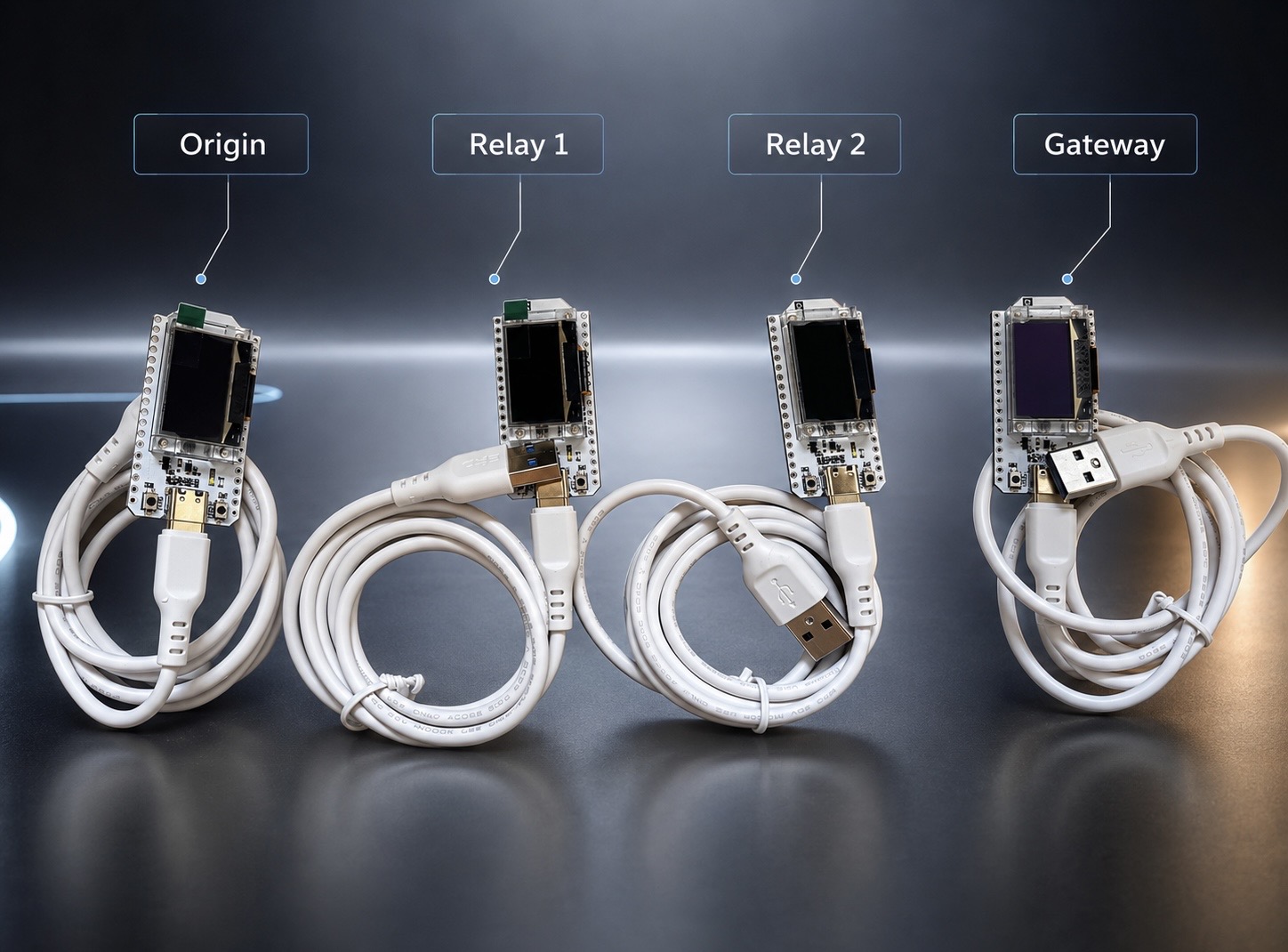
Zevoria Shield places a small network of dedicated devices through a facility's dead zones. When a person triggers an SOS, the alert hops device to device through Zevoria's own infrastructure until it reaches a gateway connected to a monitoring dashboard, where a response team sees it.

Zevoria Shield alpha prototype showing the four-node relay chain: Origin, Relay 1, Relay 2, and Gateway devices connected in sequence.

Alpha prototype — Origin → Relay 1 → Relay 2 → Gateway

Origin

The device that initiates the SOS when a person triggers an alert in a dead zone.

Relay Nodes

Fixed devices placed through the facility that carry the alert across the dead zone, hop by hop.

Gateway

The exit point that delivers the alert out of the dead zone to the response dashboard.

Alpha Prototype Validation

What we have built and tested.

Zevoria Shield has moved from concept to a working alpha prototype, tested in real indoor conditions:

  • Live testing in a basement parking area with no mobile network
  • Testing across multiple office floors
  • Independent verification by the founder in a separate building, outside the development environment
  • SOS triggered in a no-network zone and carried through the relay chain to a response dashboard

Prototype configuration

Origin node× 1
Relay nodes× 2
Gateway× 1
Dashboard layerevent visibility
Trigger dependencyno signal needed
This is an alpha prototype built for validation and pilot evaluation. It is not a commercially deployed or certified product.
Current Stage

Where Zevoria Shield is today.

We believe in being precise about stage. Zevoria Shield is an early-stage system entering structured pilot validation — not a finished product. We would rather state that clearly than overclaim.

Alpha prototype completedDONE
Prototype handover completedDONE
Dead-zone testing completedDONE
Independent founder verification completedDONE
Customer validation now openACTIVE
Inviting controlled pilot conversations with enterprise facilities.
Commercial deploymentFUTURE
Not yet deployed or certified. Follows successful pilot validation.
What a Pilot Measures

A pilot is a structured evaluation, not a sales installation.

With each pilot site, we aim to validate eight things:

01

Alert success rate

How reliably an SOS reaches the dashboard.

02

Alert latency

How quickly the alert arrives after a trigger.

03

Relay coverage

How well the network covers the facility's dead zones.

04

Gateway placement

The right configuration for a given building.

05

Security workflow

How the alert fits existing response procedures.

06

Event log usefulness

Whether the record supports audit and compliance needs.

07

Deployment effort

What installation actually requires on site.

08

Buyer urgency

Whether this problem is worth solving for your facility.

Who This Is For

Who we are looking to work with now.

Pilot sites

Enterprise facilities with known indoor dead zones, willing to run a structured evaluation. Current focus: corporate and technology campuses in Pune and Mumbai.

Enterprise safety & EHS leaders

Those responsible for workplace safety and incident response who recognise the dead-zone gap.

Security & facility management partners

Organisations that manage safety operations across enterprise sites.

Early-stage investors

Investors interested in safety infrastructure and enterprise IoT at the validation stage.

About the Founder

Built by an operator, not a lab.

Zevoria Technologies was founded by Amit Shirke, a DPIIT-recognised startup founder based in Mumbai. His background is unconventional for a safety-technology founder: years in high-pressure hospitality operations across global brands including The Oberoi, Hyatt, Hilton, and Pullman, where systems had to perform reliably with zero margin for error, followed by building and leading large distribution teams across India.

That combination shapes how Zevoria approaches safety: as an operational reality that must work under pressure, not a feature on a specification sheet.

FAQ

Straight answers.

Is Zevoria Shield a finished product?

No. It is a working alpha prototype that has been validated in live dead-zone conditions. It is now entering structured pilot evaluation. We are deliberately clear about this stage.

Does the user need phone signal to trigger an SOS?

No. That is the core of the system. The person triggering the alert does not need mobile signal, Wi-Fi, or GPS at the point of trigger. Zevoria Shield's own infrastructure carries the alert out of the dead zone.

Is Zevoria Shield certified?

Not yet. As an alpha-stage system, it has not completed commercial certification. Certification is part of our roadmap toward deployment, after pilot validation.

What does a pilot involve?

A structured evaluation at your facility to measure alert reliability, coverage, latency, workflow fit, and deployment effort. It is designed to answer whether this solves a real problem for your site — not to push a sale.

What types of facilities is this for?

Our current focus is corporate and technology campuses with known indoor dead zones. Hospitals, warehouses, logistics, and industrial facilities are on our roadmap as the system matures through pilot validation.

Who owns safety response during a pilot?

Your existing security and response teams. Zevoria Shield is designed to deliver alerts into your current response workflow, not to replace it.

Where is Zevoria based?

Mumbai, India. Zevoria Technologies Private Limited is a DPIIT-recognised startup.

Get Involved

Run a Zevoria Shield pilot at your facility.

If you manage safety, facilities, or operations at an enterprise campus with indoor dead zones, we would like to talk.